What the CBRE-FICCI Flex-plosion report means for GCCs and multinationals making office decisions in India right now.
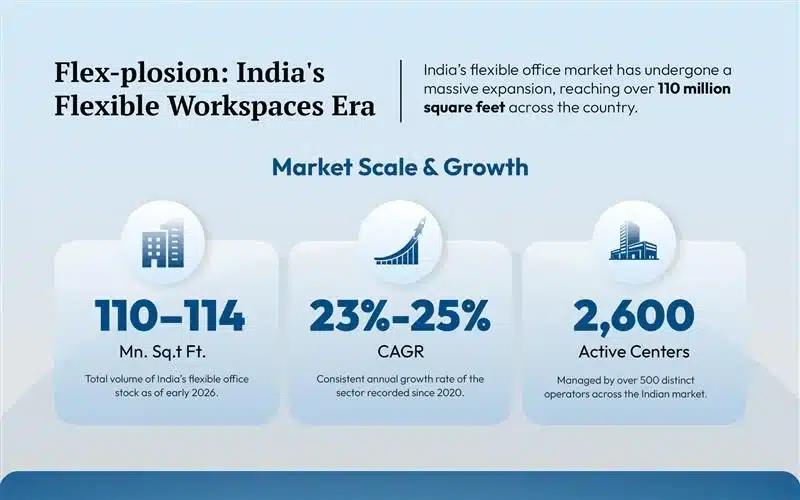
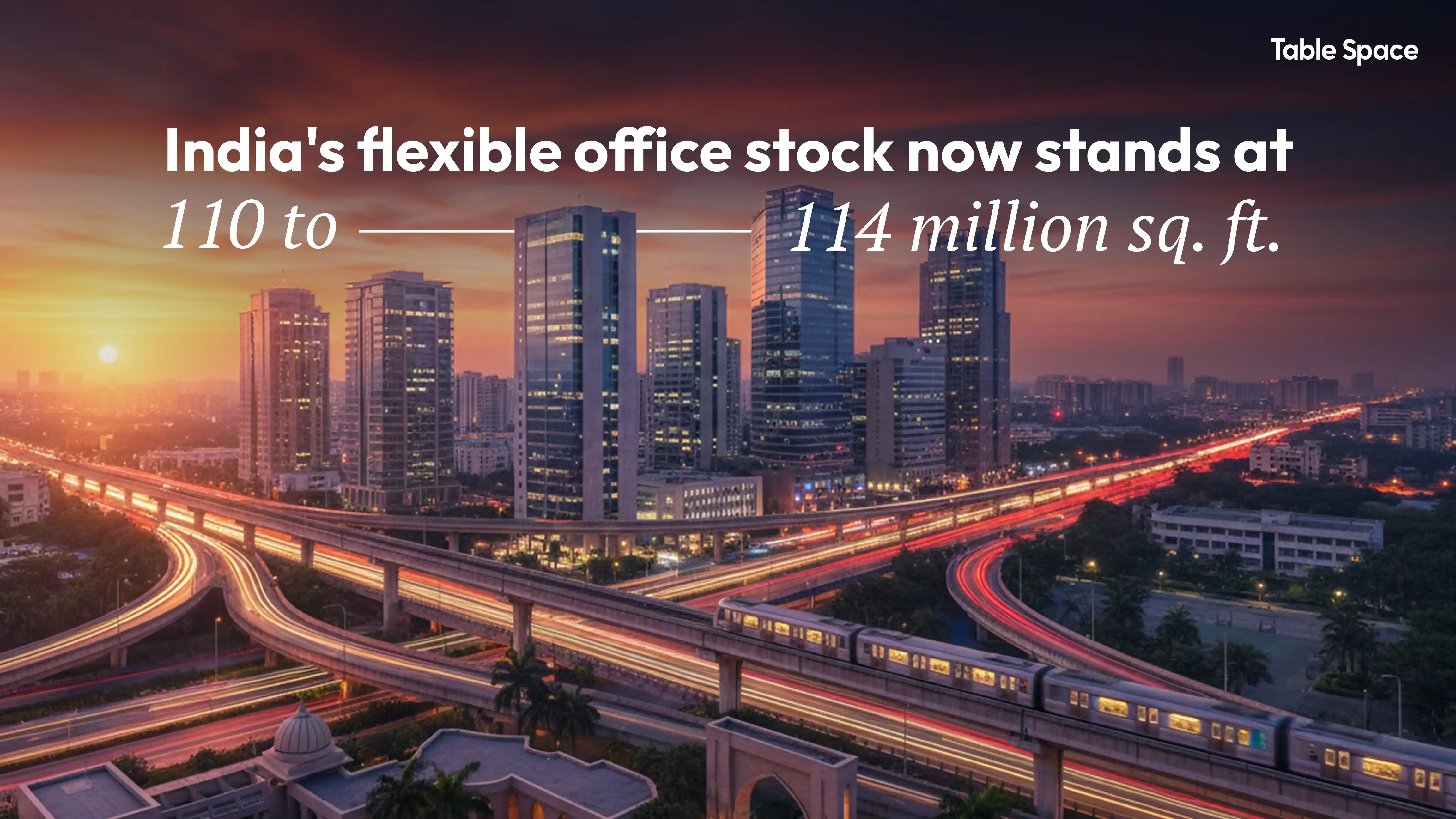
TL;DR India's flexible office stock crossed 110 million square feet in 2025, three times what it was in 2020. Coworking suits lean, short-tenure deployment. Managed offices are built for permanent, branded, enterprise-grade operations. A hybrid of both is how sophisticated occupiers now structure their India footprint. This piece covers what each model costs, who it serves, and how to position your organisation against the market. In March 2026, CBRE India and FICCI published Flex-plosion: India's Flexible Workspaces Era. India's flexible office stock now stands between 110 and 114 million square feet, growing at a 23 to 25 percent CAGR since 2020. Over 500 operators run approximately 2,600 centres. In 2025, 55 to 60 percent of total flex demand came from global companies making deliberate, long-term real estate allocations. The flex sector is no longer a cost-arbitrage story for early-stage companies. It is a core instrument of enterprise real estate strategy.Why Conventional Leasing No Longer Fits Enterprise Real Estate Needs
The traditional lease operates on a premise that breaks under conditions most enterprise expansions actually face. You commit to a fixed floor for five to nine years, deposit six to twelve months of rent upfront, absorb a fit-out cycle running twelve to eighteen months, then operate through a fragmented vendor ecosystem: landlord, contractor, IT provider, facilities management firm, security vendor, cleaning company. For a GCC entering India or scaling across cities, this compounds cost and risk in avoidable ways. Capital that should deploy toward talent sits in deposits. The headcount assumption baked into the lease is likely wrong within two years. And the internal real estate capability required to execute is not something most enterprise teams came to India to build. The Cushman and Wakefield research co-published with Table Space in 2024 captured this: enterprises are seeking a single, accountable partner to manage the full real estate lifecycle. The managed office model serves exactly that requirement.Coworking Spaces, Managed Offices, and Hybrid Portfolios: What Each Option Delivers
The phrase flexible office space covers materially different products. Treating them as interchangeable is where real estate decisions produce the wrong outcome. Coworking spaces are shared environments where infrastructure costs are distributed across multiple tenants. You pay per seat on monthly rolling terms, walk into an operational workspace on day one, and carry no vendor overhead. For teams under twenty people, for initial market entry, or for project deployments with a defined timeline, coworking delivers a cost-to-flexibility ratio no other model approaches at that scale. The ceiling is structural, not cosmetic. Shared networks, shared server rooms, and shared physical access mean that for any organisation handling regulated data under SOC2, ISO 27001, or GDPR, a coworking environment is not a specification trade-off. It is a compliance non-starter. Auditors assess access controls at the perimeter of your environment. In a coworking building, that perimeter includes every other occupant on the floor. Managed offices are fully customised, private workspaces built to one occupier's specifications and operated end-to-end by a single provider. The enterprise controls the floor plan, network architecture, security configuration, and brand environment. Fit-out, facility management, IT, utilities, and security consolidate into one monthly fee. Lease terms run one to three years. For GCCs requiring dedicated infrastructure, compliance-ready layouts, and brand consistency across geographies, managed offices are not the premium tier. They are the operationally correct one. Hybrid portfolios are where the most disciplined enterprise strategies now operate. A managed office anchors the headquarters. Flexible workspace or coworking serves employees in secondary cities and shorter-tenure deployments. The CBRE-FICCI report identifies this portfolio integration as one of the three structural shifts defining the current market.